If you’ve ever wished for longer, fuller lashes without relying on extensions or daily mascara, you’ve likely come across Latisse. It’s the first and only FDA-approved prescription treatment specifically designed to grow eyelashes, but how does it actually work, and how long does it take to see real results? Here’s what you need to know before starting treatment.
What Is Latisse?
Latisse (bimatoprost ophthalmic solution) is a prescription treatment originally developed to lower eye pressure in glaucoma patients. During clinical use, doctors noticed an interesting side effect, patients’ eyelashes were growing longer, thicker, and darker. This discovery led to Latisse being developed and approved specifically for eyelash growth.
How Does Latisse Work?
Latisse works by affecting the eyelash growth cycle, which has three phases:
- Anagen (growth phase): Latisse is believed to extend this phase, allowing lashes more time to grow before falling out
- Catagen (transition phase): A short phase where lash growth slows
- Telogen (resting phase): The phase where lashes eventually shed
By prolonging the growth phase and increasing the percentage of lashes actively growing at any given time, Latisse encourages lashes to grow longer, thicker, and darker than they would naturally.
How to Apply Latisse
Latisse is applied once daily, typically in the evening, using the provided sterile applicator:
- Ensure your face is clean and makeup-free, including contact lenses removed if applicable
- Apply one drop of Latisse to the applicator brush
- Draw the applicator carefully along the base of your upper lash line, similar to applying eyeliner
- Blot any excess to prevent it from spreading beyond the intended area
- Repeat on the other eye using a new, unused applicator
Consistency matters significantly. Latisse only works with regular daily use, and results gradually reverse if treatment is stopped.
Real Results Timeline: What to Expect
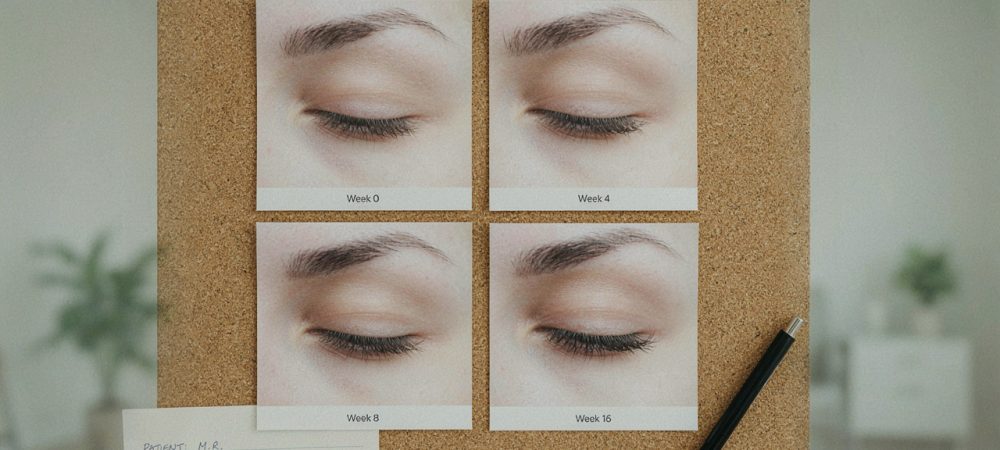
Because Latisse works with your natural lash growth cycle, results build gradually rather than appearing overnight. Here’s a general timeline based on clinical studies and typical patient experiences:
Weeks 1–4
Most patients don’t notice significant changes yet during this early phase. Your lashes are just beginning to respond to treatment as they cycle through their natural growth phases.
Weeks 4–8
Subtle changes often start to become noticeable; lashes may appear slightly longer or a bit fuller. This is typically the point where patients start feeling encouraged to continue consistent use.
Weeks 8–12
This is often when the most noticeable improvements appear. Many patients report their lashes looking visibly longer, thicker, and darker by around the 12 to 16 week mark, which aligns with clinical trial data.
Week 16 (Full Results)
Clinical studies typically measure full results at 16 weeks of consistent daily use. At this point, most patients see their maximum lash growth response, though results can vary based on individual biology.
Maintenance
Once you’ve reached your desired results, continued use is necessary to maintain them. If you stop using Latisse, lashes will gradually return to their original length and thickness over several weeks to months as the growth cycle resets.
What Results Can You Realistically Expect?
Clinical trial data has shown that with consistent use, most patients experience:
- Increased lash length
- Increased lash thickness/fullness
- Darker lash pigmentation
Results vary by individual, and while many patients see meaningful improvement, it’s important to have realistic expectations rather than comparing your timeline to someone else’s.
Possible Side Effects
Latisse is generally well-tolerated, but some patients may experience:
- Mild eye redness or irritation
- Itching at the application site
- Darkening of the skin at the application area (usually reversible after stopping use)
- In rare cases, changes in eye color for patients with lighter-colored irises (typically associated with prolonged, improper use beyond the lash line)
This is why proper application technique and medical guidance matter, especially since Latisse is a prescription treatment that should be used under professional supervision.
Why a Prescription and Professional Guidance Matter
Because Latisse is a prescription-only treatment, proper evaluation before starting is important to confirm it’s appropriate for your eye health and to ensure you understand correct application technique. A healthcare provider can also monitor for any side effects and answer questions throughout your treatment course.
At Opal Medical Clinic & Aesthetics, our physician team, Dr. Faiza Upal, Dr. Housam Bada, and Dr. Zhelal Alsaid, provides Latisse prescriptions alongside proper guidance on application and realistic expectations for your results. As a trusted Family Medical Aesthetics Clinic Calgary, we combine the medical oversight of our Family Medicine Calgary practice with aesthetic treatments like Latisse, ensuring your care is both safe and effective.
Frequently Asked Questions
How long does it take to see results from Latisse?
Initial subtle changes may appear around 4 to 8 weeks, with full results typically visible by around 16 weeks of consistent daily use.
What happens if I stop using Latisse?
Lashes will gradually return to their original length and thickness over several weeks to months once treatment stops, since the effect isn’t permanent.
Is Latisse safe for everyday use?
Yes, when used as directed and under proper medical guidance, Latisse is considered safe for long-term daily use.
Can Latisse be used on the lower lash line?
Latisse is specifically designed and approved for use on the upper lash line only, applying it elsewhere isn’t recommended.
Do I need a prescription for Latisse?
Yes, Latisse is a prescription treatment, meaning a healthcare provider must evaluate and prescribe it before you can begin use.
Curious whether Latisse is right for you? Our physician team can evaluate your eligibility and guide you through proper application for the best results. Book a consultation to get started.